QF 3.7-inch mountain howitzer
QF 3.7-inch mountain howitzer
Jump to navigation
Jump to search
| Ordnance QF 3.7 inch mountain howitzer | |
|---|---|
 A 3.7-inch QF mountain gun. Dated from 1939 | |
| Type | Mountain gun |
| Place of origin | United Kingdom |
| Service history | |
| In service | 1917–Present |
| Used by | Nepal (The Nepalese Army still has 90-100 in Service)[when?][citation needed] |
| Wars |
|
| Production history | |
| Produced | 1915–? |
| Specifications | |
| Mass | 1,610 lb (730 kg)[1] |
Barrel length | 3 ft 7.5 in (1.10 m)[1] |
| Shell | Separate-loading QF 94 x 92 mm R[2] |
Shell weight | 20 lb (9.1 kg) HE, Shrapnel, Smoke, Starshell, HEAT |
| Calibre | 3.7 in (94 mm) |
| Recoil | Hydro-pneumatic, variable, 17.5–35 inch[1] |
| Carriage | Wheeled, split trail |
| Elevation | −5° to +40°[1] |
| Traverse | 20° L & R[1] |
| Muzzle velocity | 973 ft/s (297 m/s)[1] |
| Maximum firing range | 5,899 yd (5,394 m)[1] |
Ordnance, QF 3.7-inch howitzer is a mountain gun, used by British and Commonwealth armies in World War I and World War II, and between the wars.
Contents
1 History
1.1 World War I
1.2 Interwar years
1.3 World War II
1.4 Post War
2 Details
3 Ammunition
4 See also
5 Surviving examples
6 Notes and references
7 Bibliography
8 External links
History[edit]
The British Indian Army first requested a modern mountain gun in 1906 to replace the BL 10 pounder Mountain Gun, which had been hastily developed after the Second Boer War, but itself had several shortcomings. In particular, the shell weight was seen as too light and the gun lacked any recoil absorber or recuperator, meaning the gun had to be relaid after every shell was fired. However, financial constraints delayed production of the 3.7-inch weapon until 1915. As a stop-gap, the barrel of the 10 pounder gun was mounted on an updated carriage to produce the 2.75 inch Mountain Gun.
World War I[edit]

Indian Army battery, probably 39th, at Jerusalem, December 1917
The 3.7-inch howitzer was first introduced in 1917, and was used in action in that year in the Mesopotamian Campaign (modern Iraq area).
The 22nd (Derajat) Indian Frontier Force mountain battery arrived in the East Africa campaign on 18 December 1916, when they relieved the 28th Battery which returned to India.[3] They appear to have re-equipped from the 10-pounder mountain gun to the 3.7-inch howitzer while in East Africa, and first used the new weapon in action in an attack on German positions at Medo, 11 April 1918.[4]
Interwar years[edit]

Indian gun crew firing, India, circa. 1930
The 3.7-inch Howitzer superseded the 2.75-inch Mountain Gun following World War I. It was used by mountain artillery regiments of the Royal Artillery and the Indian Artillery, and saw much service on the North West Frontier of India between the wars.
World War II[edit]

In action in Burma, 3 November 1944
During World War II, the weapon equipped artillery units engaged in the North African Campaign (Tunisia), the Italian Campaign, the Kokoda Campaign, and Burma Campaign, and it was also used in the Netherlands and Ruhr fighting in 1944-45 by units originally destined for mountain warfare in Greece. In the latter theatre, on occasion the gun was dismantled and manually hauled up to the upper floors of buildings to provide close support in urban fighting. A lightened version was used briefly by airborne formations. Several were supplied to the French Army after 1945; one is on display at the Vietnam Army Museum in Hanoi while another is displayed at the Zone 5 Military Museum, Danang. It was also used on Close Support versions of the A9 and A10 Cruiser Tanks in place of the standard 2 pounder, though mostly to fire smoke shells.
During the war the gun, and its ammunition, were also manufactured in other Commonwealth countries, including South Africa, by the ISCOR (Iron and Steel Corporation of South Africa), and India. South Africa also produced modified versions of the gun.[5]
The gun was finally declared obsolete by the British Army in 1960, although it had not seen service since 1945.
Post War[edit]
After the war, the gun was used, among others, by the French forces during the First Indochina War[6] and by India during the Indo-Pakistani wars of 1965[7] and of 1971.[8]
Details[edit]
The weapon was designed to be broken into eight mule loads, for transport over difficult terrain. The heaviest single section is the interrupted screw breech, which weighs 247 pounds (112 kg). Given an open gun position, a practised crew could have the guns unloaded from the mules, reassembled and deployed ready for action in barely two minutes. The 3.7-inch howitzer's adjustable suspension system allowed it to be deployed on almost any position, even those too uneven or with too steep a gradient to allow field artillery to be sited. The process of removing the howitzer from a position and reloading it onto the gun mules involved much more lifting and securing loads than deploying it, but could be accomplished in three minutes in favourable conditions.
The howitzer has a split trail, the first British weapon to do so, which allows firing at very high angles (a useful feature in mountainous terrain). It also has a large rectangular shield to protect the crew from small-arms fire, but this was often omitted to save weight. When it was first introduced, the howitzer had two wooden wheels and was light enough be towed by two horses. Later marks have pneumatic tyres and could be towed by any light vehicle, such as the Bren Carrier or jeep.
The propellant casing had five "charge zones", but HE was restricted to no more than "charge four", to prevent premature detonation of the shell. The Australian Army did employ charge five in Papua New Guinea in emergencies – the gun crews referred to it as "O'Hara's charge".
Ammunition[edit]
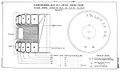
8 oz 9 dram cordite cartridge

Shrapnel shell

Mark I HE shell
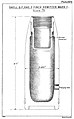
Mark I gas shell


See also[edit]
- List of mountain artillery
Surviving examples[edit]
- Royal Artillery Museum, Woolwich, London
- 1942 Mk I Barrel on Mk II Carriage, at Imperial War Museum Duxford, UK.[9]
Israel Defense Forces History Museum (Batey ha-Osef Museum), Tel Aviv
- Army Memorial Museum, Waiouru, New Zealand
- Vietnam Army Museum, Hanoi
- Zone 5 Military Museum, Danang
- The War Museum of Athens
- Example at GEM Homes, Johannesburg South Africa, to be restored shortly (pictures to follow)
- Example at Lenz Military Base, Johannesburg, South Africa, to be restored soon. (pictures to follow)
- Outside the Military Police Brigade HQ at Camp Cropper Iraq. (as of Jun 2008)
Notes and references[edit]
^ abcdefg Hogg & Thurston 1972, p. 91
^ "78- MM CALIBRE CARTRIDGES". www.quarryhs.co.uk. Retrieved 2017-10-02..mw-parser-output cite.citation{font-style:inherit}.mw-parser-output .citation q{quotes:"""""""'""'"}.mw-parser-output .citation .cs1-lock-free a{background:url("//upload.wikimedia.org/wikipedia/commons/thumb/6/65/Lock-green.svg/9px-Lock-green.svg.png")no-repeat;background-position:right .1em center}.mw-parser-output .citation .cs1-lock-limited a,.mw-parser-output .citation .cs1-lock-registration a{background:url("//upload.wikimedia.org/wikipedia/commons/thumb/d/d6/Lock-gray-alt-2.svg/9px-Lock-gray-alt-2.svg.png")no-repeat;background-position:right .1em center}.mw-parser-output .citation .cs1-lock-subscription a{background:url("//upload.wikimedia.org/wikipedia/commons/thumb/a/aa/Lock-red-alt-2.svg/9px-Lock-red-alt-2.svg.png")no-repeat;background-position:right .1em center}.mw-parser-output .cs1-subscription,.mw-parser-output .cs1-registration{color:#555}.mw-parser-output .cs1-subscription span,.mw-parser-output .cs1-registration span{border-bottom:1px dotted;cursor:help}.mw-parser-output .cs1-ws-icon a{background:url("//upload.wikimedia.org/wikipedia/commons/thumb/4/4c/Wikisource-logo.svg/12px-Wikisource-logo.svg.png")no-repeat;background-position:right .1em center}.mw-parser-output code.cs1-code{color:inherit;background:inherit;border:inherit;padding:inherit}.mw-parser-output .cs1-hidden-error{display:none;font-size:100%}.mw-parser-output .cs1-visible-error{font-size:100%}.mw-parser-output .cs1-maint{display:none;color:#33aa33;margin-left:0.3em}.mw-parser-output .cs1-subscription,.mw-parser-output .cs1-registration,.mw-parser-output .cs1-format{font-size:95%}.mw-parser-output .cs1-kern-left,.mw-parser-output .cs1-kern-wl-left{padding-left:0.2em}.mw-parser-output .cs1-kern-right,.mw-parser-output .cs1-kern-wl-right{padding-right:0.2em}
^ Farndale 1988, p. 338
^ Farndale 1988, p. 351
^ British Artillery in World War II: The 3.7-inch howitzer
^ Windrow, Martin (20 Sep 2018). French Foreign Légionnaire vs Viet Minh Insurgent: North Vietnam 1948–52. Combat 36. Osprey Publishing. p. 36. ISBN 9781472828910.
^ "Battle of Asal Uttar (1965) - Part 1 (Background)". 2016-11-15 – via medium.com.
[self-published source]
^ Singh, Jagjit (1994). Indian Gunners at War: The Western Front-1971. Lancer International. pp. 48, 50. ISBN 9781897829554.
^ Imperial War Museum (2013). "QF 3.7in Mountain Howitzer Mk I (ORD 137)". IWM Collections Search. Retrieved 10 March 2013.
Bibliography[edit]
Farndale, General Sir Martin (1988). History of the Royal Regiment of Artillery. The Forgotten Fronts and the Home Base, 1914-18. London: The Royal Artillery Institution. ISBN 978-1-870114-05-9.
Hogg, Ian V.; Thurston, L.F. (1972). British Artillery Weapons & Ammunition 1914 – 1918. London: Ian Allan. ISBN 978-0-7110-0381-1.
Gower, S. N. (1981). Guns of the Regiment. Canberra: Australian War Memorial. ISBN 978-0-642-89688-9.
External links[edit]
 | Wikimedia Commons has media related to QF 3.7 inch mountain howitzer. |
Handbook of the q.f, 3.7-inch mountain howitzer, mark I, 1921. Hosted online by State Library of Victoria, Australia
Gun drill for 3.7-inch Q.F. howitzer mark I carriage mark I 1921,1923 Hosted online by State Library of Victoria, Australia- W L Ruffel, QF 3.7-in Howitzer
- British Artillery in World War 2, Data Sheet - Ordnance, Q.F. 3.7-inch Howitzer
- ra39-45.pwp
- 3.7 inch Mountain Howitzer at Landships
Categories:
- World War I howitzers
- World War I artillery of the United Kingdom
- World War II artillery of the United Kingdom
- Mountain artillery
- World War I mountain artillery
- World War II mountain artillery
- 94 mm artillery


(window.RLQ=window.RLQ||).push(function(){mw.config.set({"wgPageParseReport":{"limitreport":{"cputime":"0.436","walltime":"0.579","ppvisitednodes":{"value":2078,"limit":1000000},"ppgeneratednodes":{"value":0,"limit":1500000},"postexpandincludesize":{"value":76426,"limit":2097152},"templateargumentsize":{"value":6520,"limit":2097152},"expansiondepth":{"value":15,"limit":40},"expensivefunctioncount":{"value":3,"limit":500},"unstrip-depth":{"value":1,"limit":20},"unstrip-size":{"value":27167,"limit":5000000},"entityaccesscount":{"value":0,"limit":400},"timingprofile":["100.00% 446.635 1 -total"," 40.05% 178.891 1 Template:Infobox_weapon"," 37.73% 168.494 1 Template:Infobox"," 29.93% 133.677 1 Template:Reflist"," 19.39% 86.616 3 Template:Cite_web"," 13.18% 58.880 3 Template:Fix"," 11.38% 50.821 1 Template:When"," 10.51% 46.924 7 Template:Convert"," 8.92% 39.846 1 Template:Commons_category"," 7.68% 34.304 5 Template:Category_handler"]},"scribunto":{"limitreport-timeusage":{"value":"0.185","limit":"10.000"},"limitreport-memusage":{"value":5758404,"limit":52428800}},"cachereport":{"origin":"mw1271","timestamp":"20190409114051","ttl":2592000,"transientcontent":false}}});mw.config.set({"wgBackendResponseTime":113,"wgHostname":"mw1325"});});


